

Model Detail
A Repeatable Read on Every Acre of Habitat
The Habitat Index model classifies every pixel in an image across nine land-cover classes, from grass and flowers to trees, dry vegetation, and bare soil, then reports the percentage each occupies. The result is a consistent, comparable snapshot of habitat composition, not a one-time estimate.
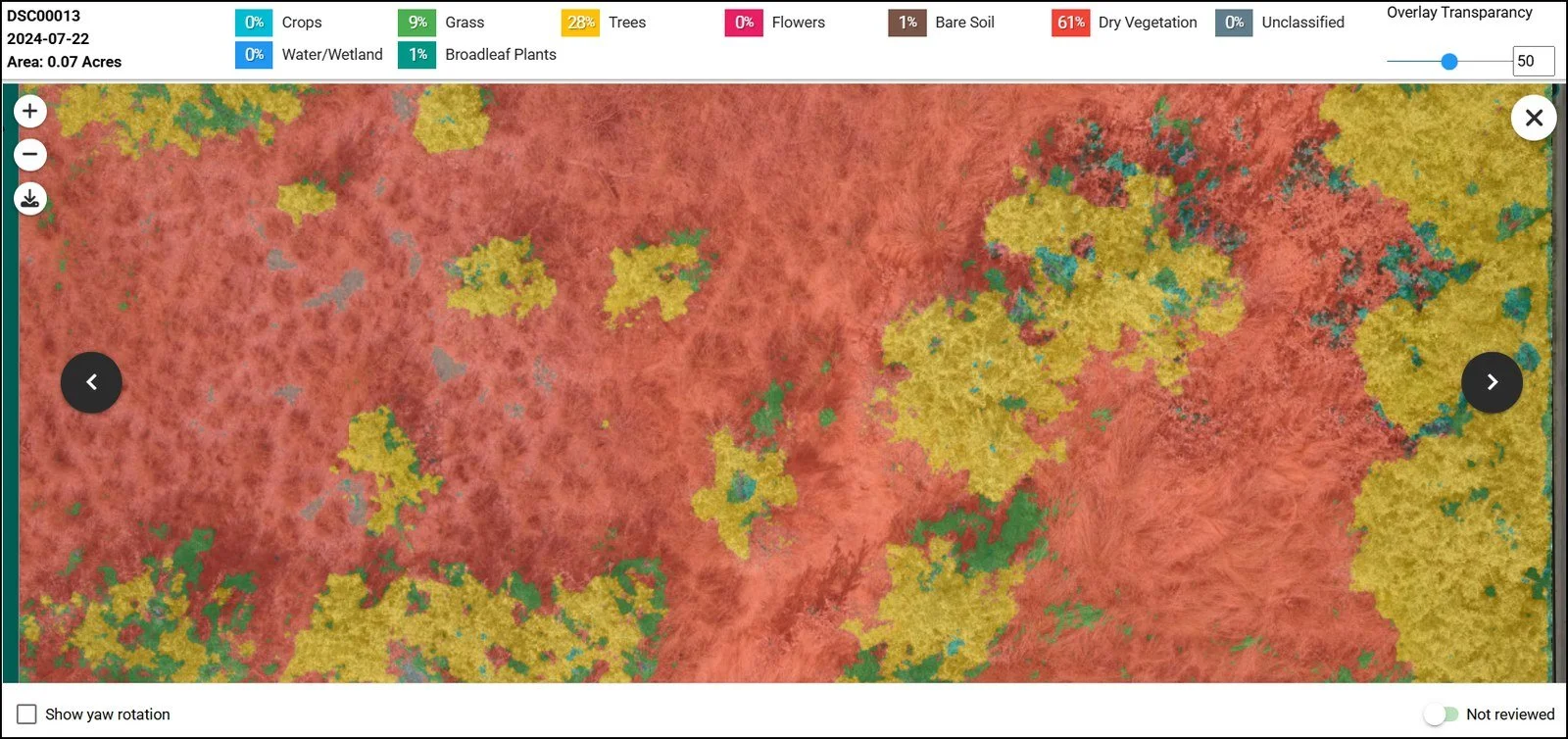
Sample Habitat Index output: pixel-level classification across nine land-cover classes, with percent coverage reported per class.
Habitat Index
Nine Land-Cover Classes, Read the Same Way Every Time
The Habitat Index model looks at every pixel in an image and sorts it into one of nine land-cover classes: crops, grass, trees, flowers, bare soil, dry vegetation, water/wetland, broadleaf plants, and unclassified. Each class is reported as a percentage of the image, so a site's composition becomes a number you can act on and compare, not just a photo you have to interpret by eye.
Classification
Nine-Class Pixel Classification
Every pixel is classified and rolled up into a percentage per class, delivered as a data layer, not just an image. Dry-vegetation percentages can inform prescribed-burn planning; class breakdowns can help prioritize which sites a vegetation management team visits next.
Applications
Built for Every Corridor and Acreage Type
CRP acres, roadway and railway corridors, gas/electric distribution corridors, and solar generation sites all get the same classification standard, supporting regulatory reporting, land management decisions, and pollinator and wildlife habitat planning alike.
Standardization
A Shared Standard, Not Shared Data
The same classification standard is available to every POLLi® customer, which is what makes results comparable: this season against last, or the start of a restoration project against its progress. What's shared is the standard, not any organization's imagery or findings, unless that organization chooses to share it.
Curious what the Habitat Index would show on your land?
We're happy to talk through how pixel-level classification fits into your monitoring, reporting, or conservation program.